The Innovator Bringing AI and Medicine Together
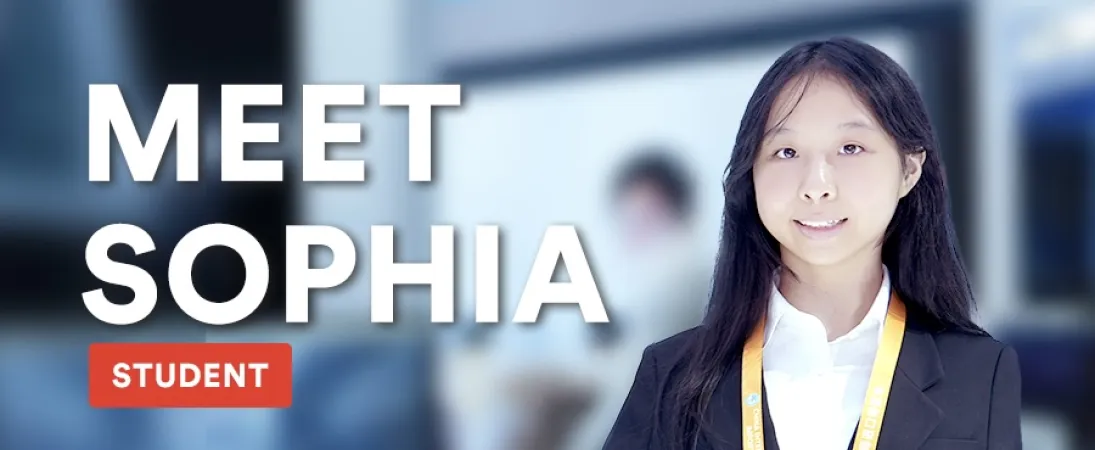
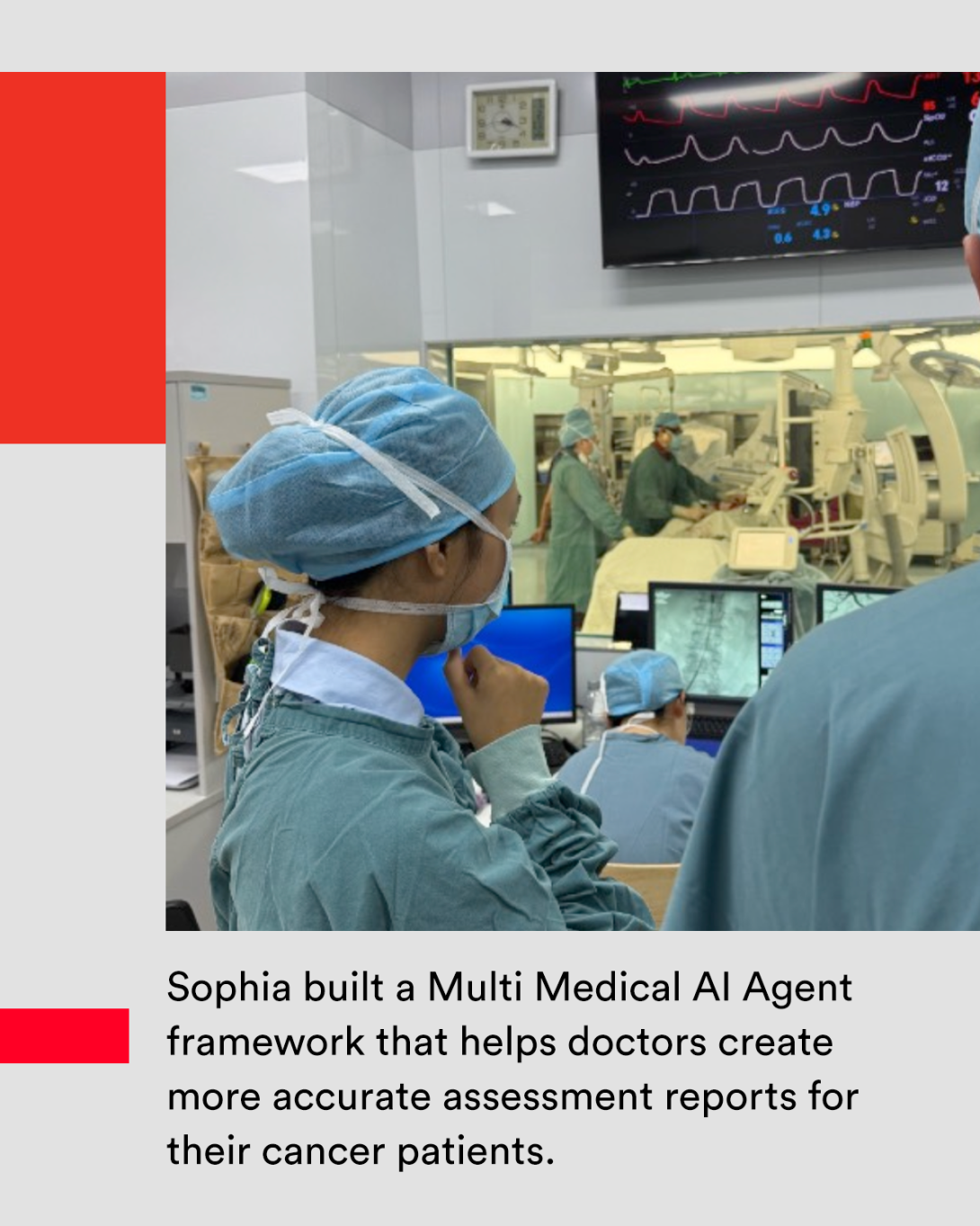
Sophia L., a junior at Shanghai American School, has spent the past year developing a Multi Medical AI Agent framework designed to help doctors create more accurate assessment reports for cancer patients. What began from personal motivation has grown into a project shaped by hospital partnerships, university mentors, and hands-on testing with real medical cases. In November, she presented her project at the China International Import Expo (CIIE) which has since led to other opportunities.


How did you become interested in creating AI for cancer treatment?
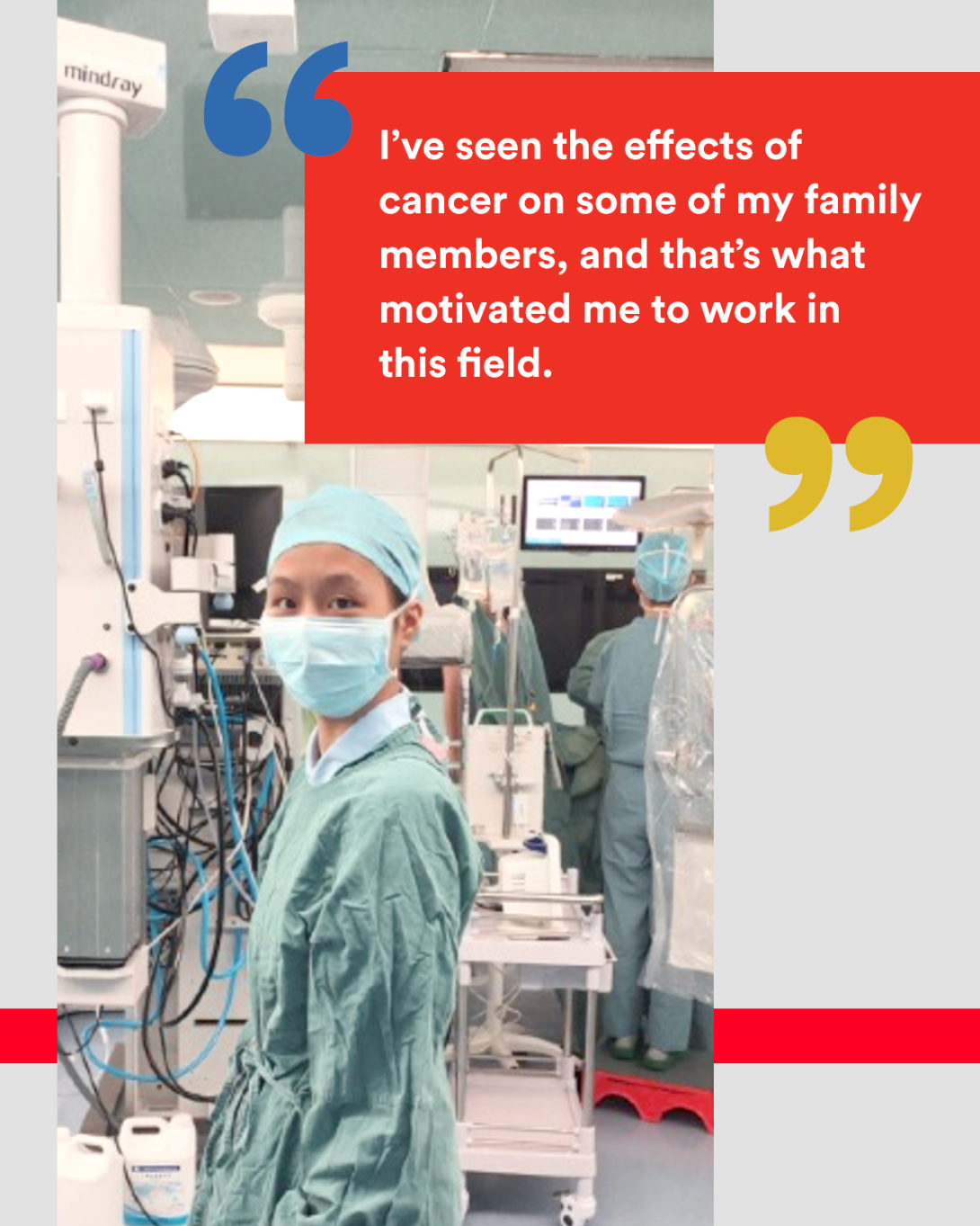
I became interested in this field because I have seen the effects of cancer in my own family. I wanted to use what I love, which is AI and computer science, to create something that could actually help doctors and patients. As I began learning more coding and AI concepts, I realized there were real gaps in the tools doctors were using. That pushed me to dive deeper and try to build something useful.
Can you tell us more about your project?
My project is called MMAKER: Multi MedAI Agents with Knowledge-Enhanced Reasoning for Cancer Clinical Decision Support. This is an AI framework that helps doctors by simultaneously analyzing pathology images, genomic data, and clinical information, giving them a more efficient and accurate way to understand a patient’s case and then provides a comprehensive assessment report. Even though I focused on cancer, the framework is scalable and could be expanded to support many other diseases through more training and development.
How did the opportunity to present at the China International Import Expo (CIIE) come about?
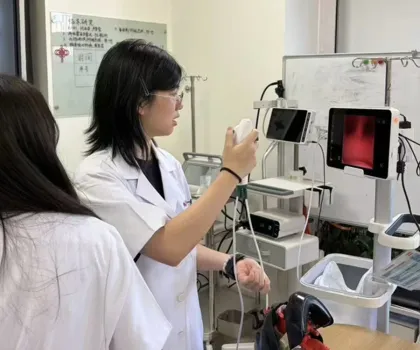
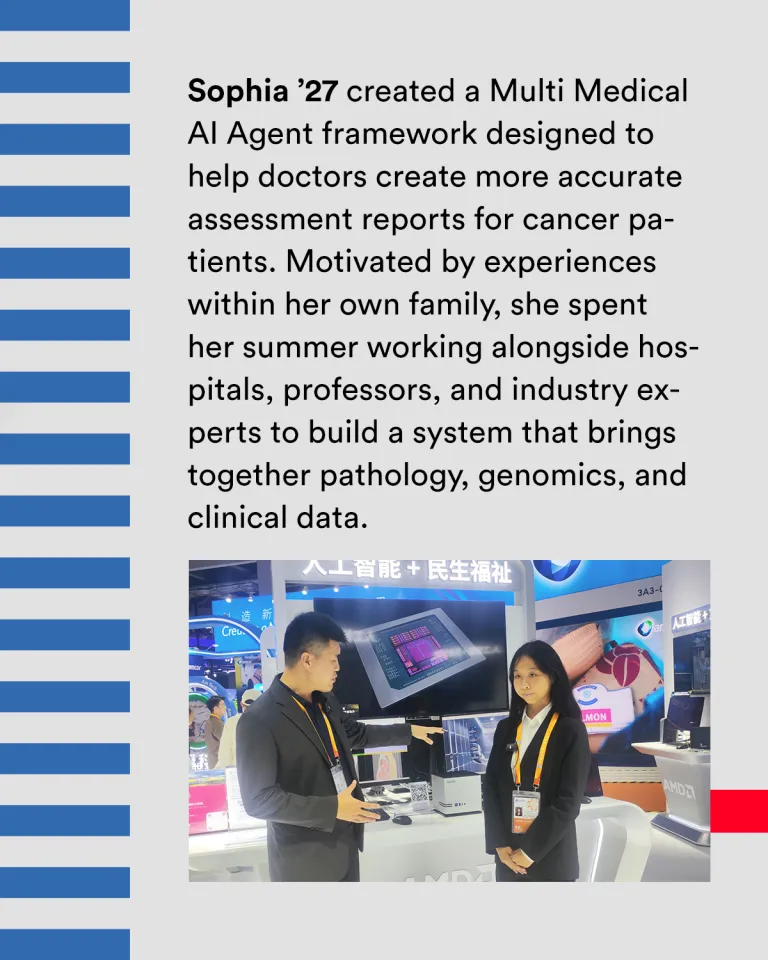
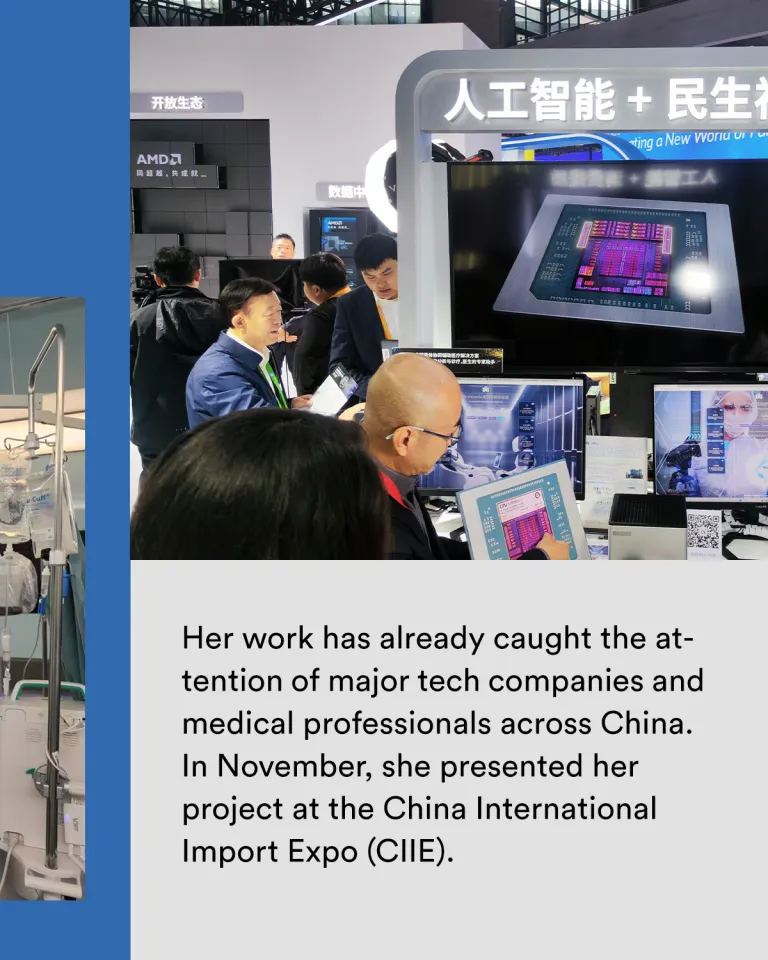
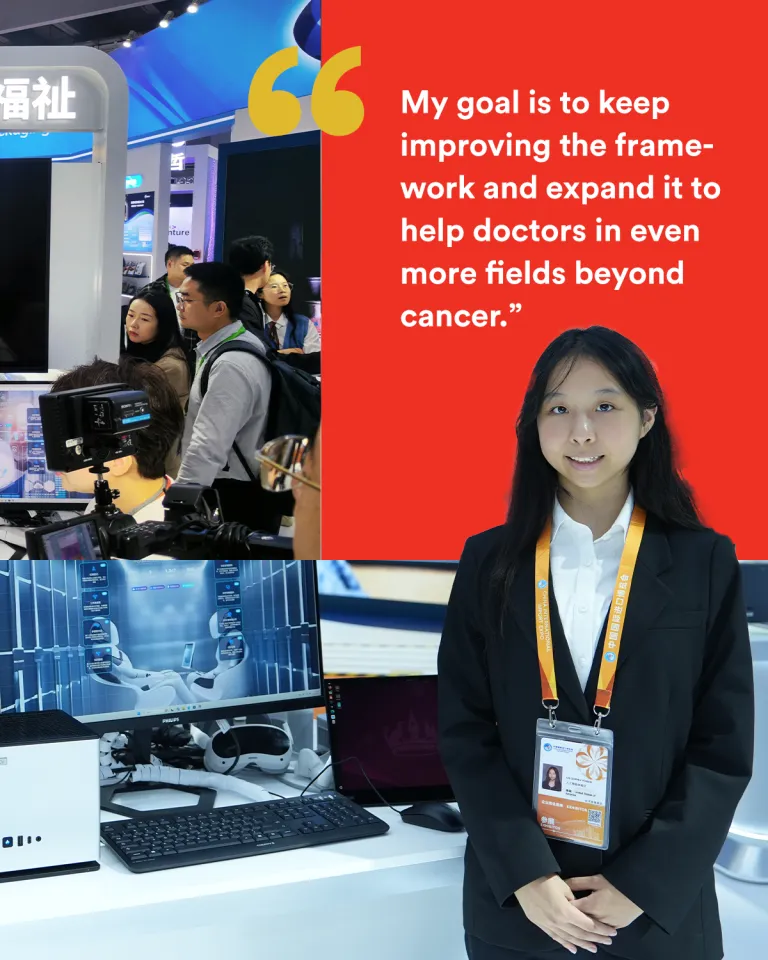
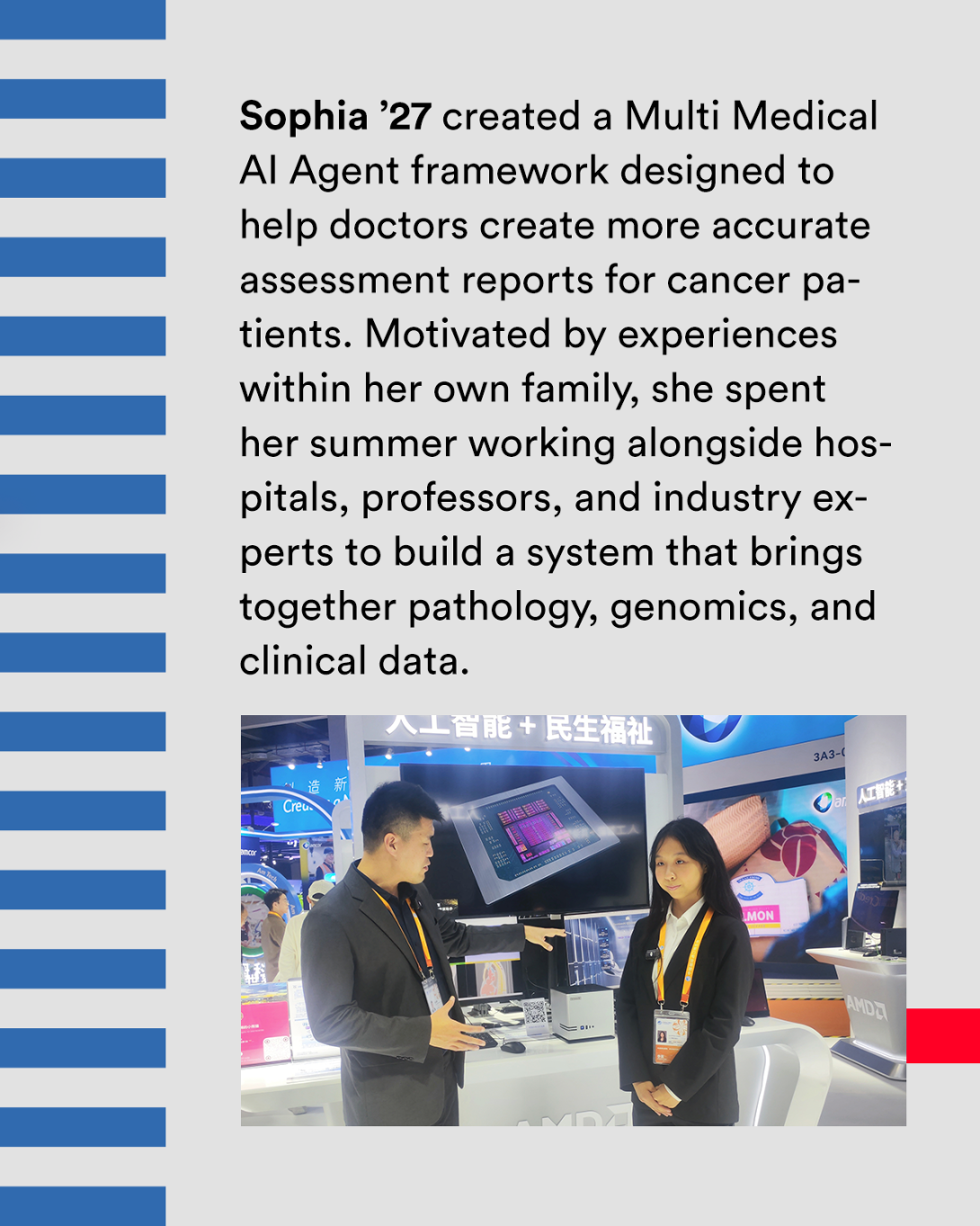
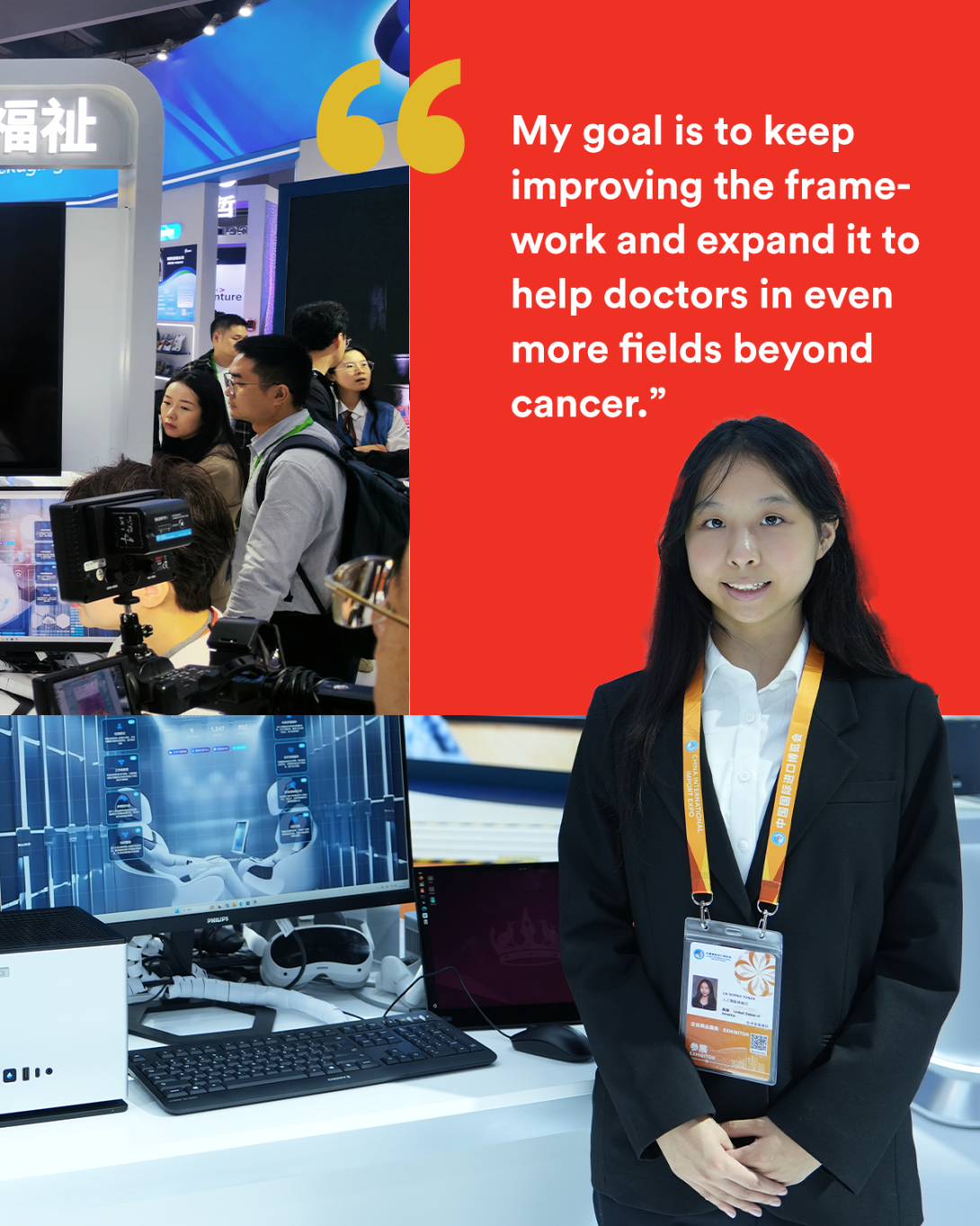
Some of the doctors I collaborated with asked me to deploy my system onto AI workstations and AMD learned about my project. I was invited to present at the CIIE, which was an amazing experience. At the CIIE, I shared my project with doctors and visitors, and afterwards I was invited to present and showcase it at a medical forum for hospital directors across China. It opened opportunities to expand the system to more doctors in the future. I even had people from completely different industries ask if the framework could be adapted for their needs.
You collaborated with doctors and university professors while building this project. How did those partnerships help your project?
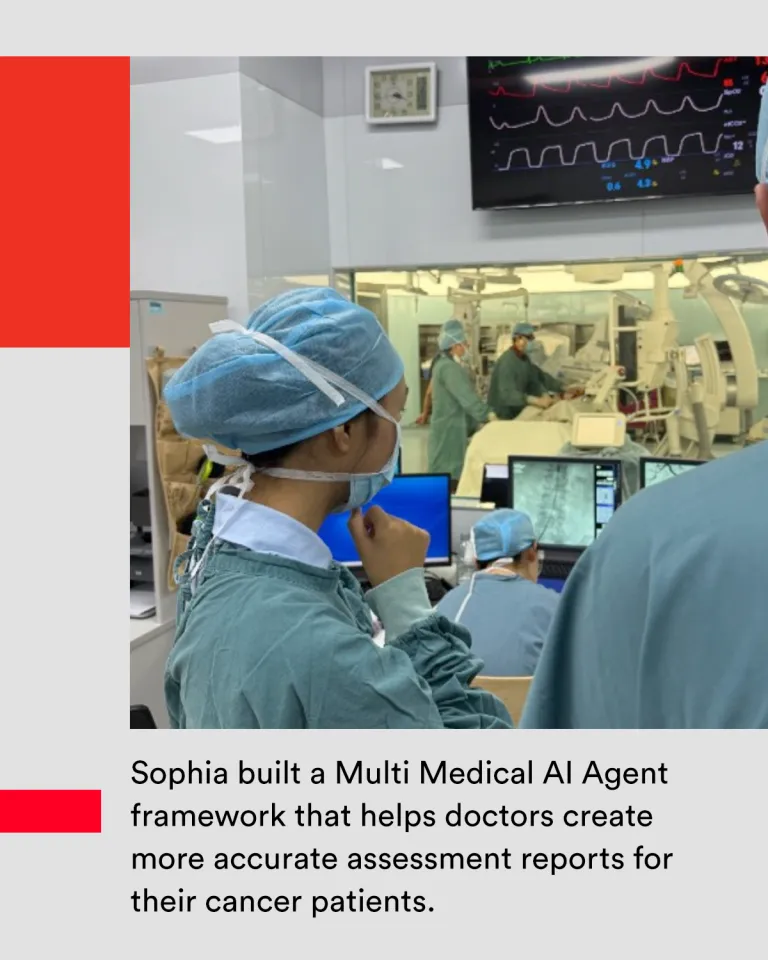
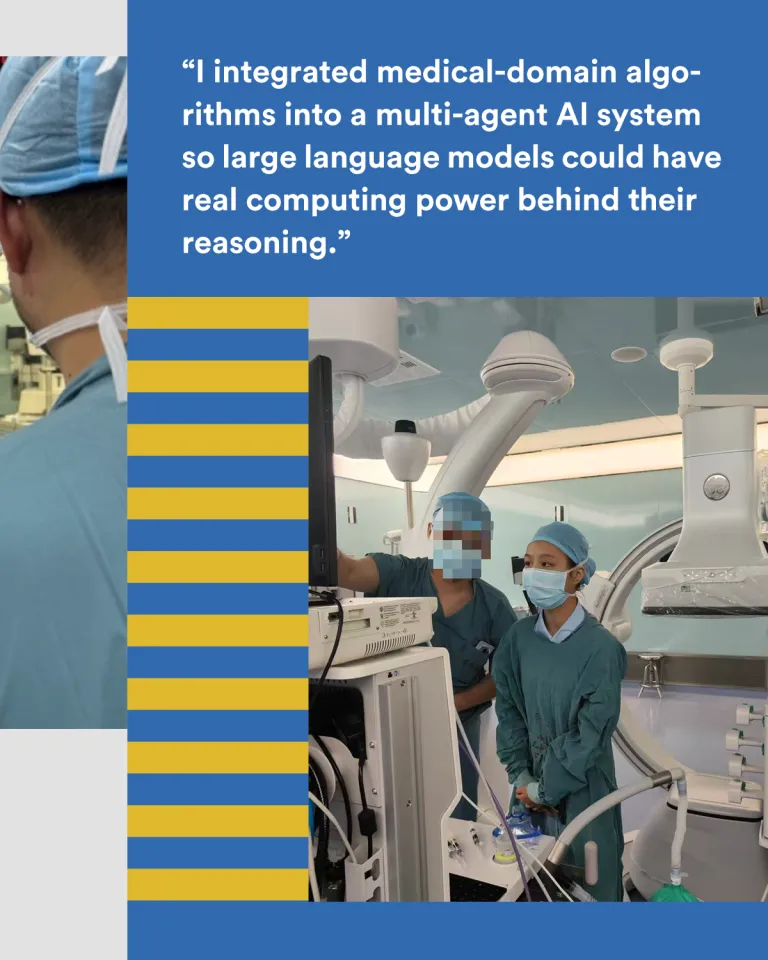
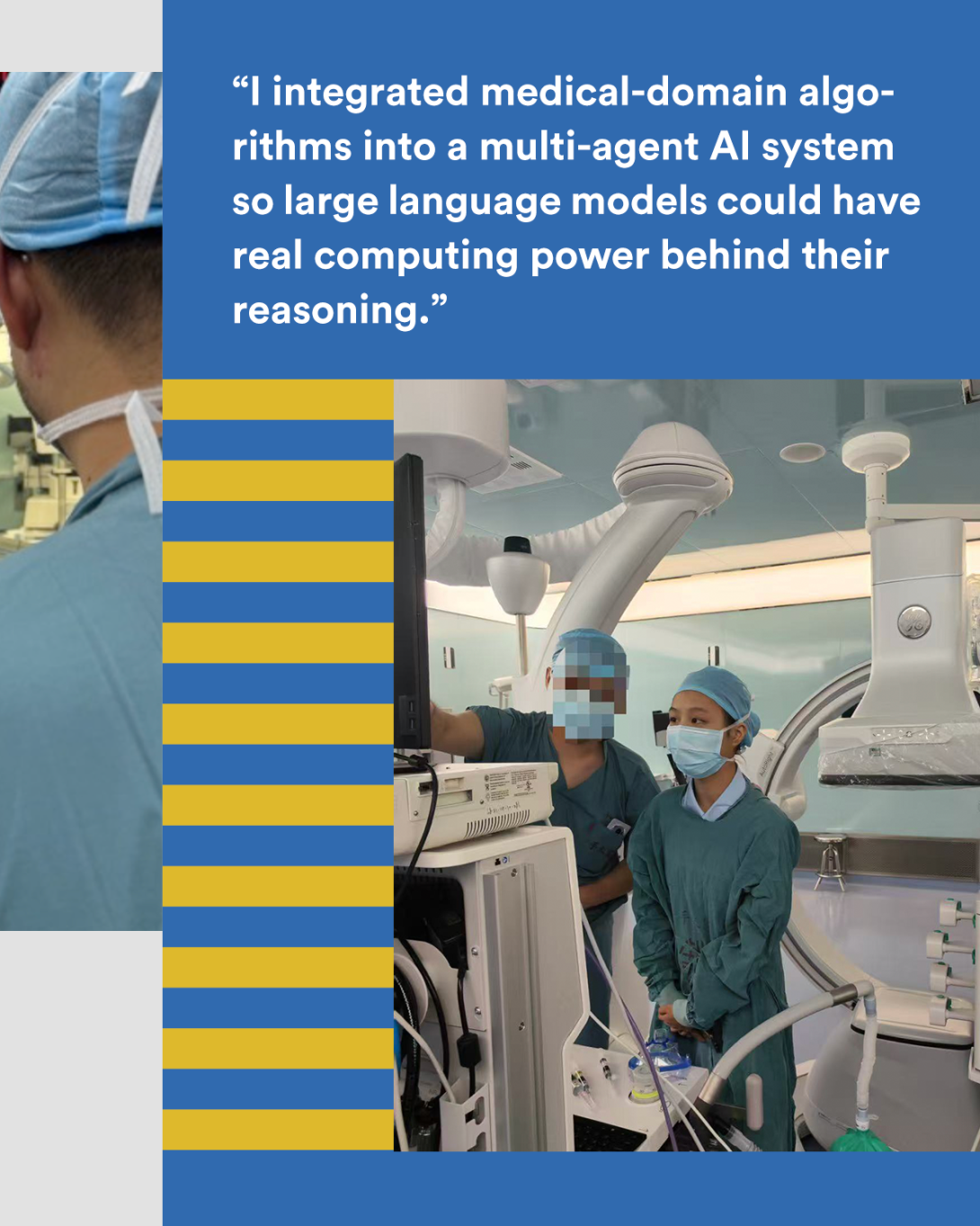
The doctors I worked with helped me understand the real challenges they face when using AI in hospitals. They showed me where current systems fall short and gave me feedback that helped me make my framework more practical for clinical use. I also deployed my system onto an AI workstation in one of the hospitals, which allowed the doctors there to test it directly.
On the research side, I collaborated with professors who guided the development of my AI system. One of them was from Harvard University, who works at Mass General Brigham Hospital. He introduced me to the idea of using a multi-agent system and guided me towards building a framework that could support complex medical tasks.
How has SAS supported you along the way?
My teachers at SAS have helped me so much. My computer science teacher gave me really valuable feedback on how to strengthen the algorithm design and how to present my work clearly. My biology teachers also helped me understand the cancer side of my research better. My mentors from the SAS science and engineering clubs also provided me with valuable feedback and support. Even teachers outside of these subjects have shown interest, which made me feel more confident as I kept developing my project.
What are your plans for the future of this project?
I want to keep improving the system and share it with more hospitals. I also hope to present it at medical and technological forums and continue participating in academic competitions so I can keep developing my Multi MedAI Agent framework. My goal for this project is to grow into something that truly supports doctors and benefits patients.
Sophia, your project aligns with the SAS Mission and showcases how innovation and compassion combine for meaningful impact. We cannot wait to see how your work continues to grow!